
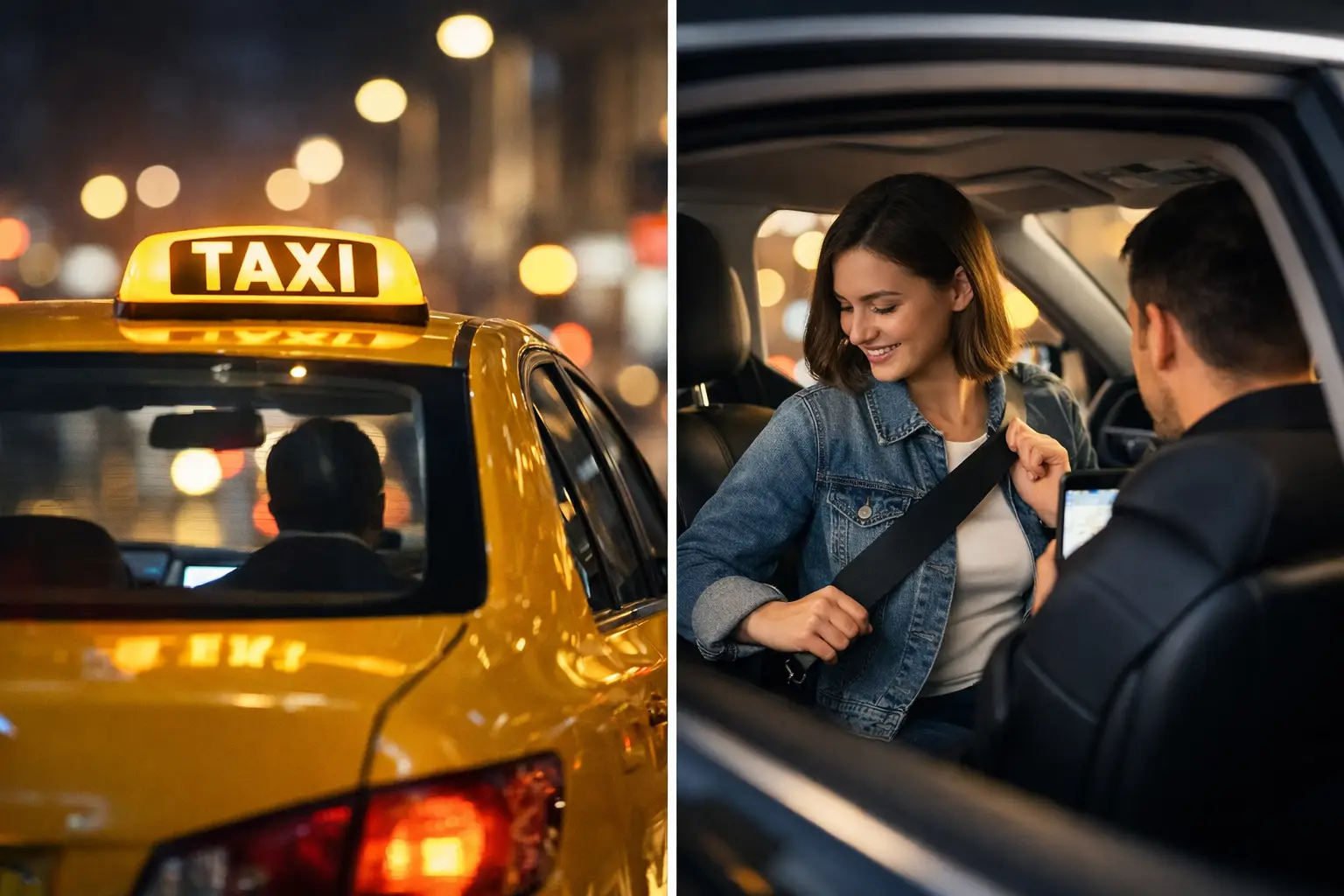
Taxi Versus Rideshare Safety: What Matters Most
A late airport arrival, a busy Melbourne event, or a night out in Frankston can leave you making the same quick decision: taxi or rideshare? Taxi versus rideshare safety is not simply about which vehicle arrives first. It comes down to how easily you can identify the driver and car, where you are picked up, what support is available, and how confidently you can manage the trip from door to door.
Both options can be safe when used carefully. Both also rely on passengers making sensible choices, especially after dark, in unfamiliar suburbs, or when travelling alone. The best option is often the one that gives you the clearest information, the safest pickup point and a reliable way to get help if something does not feel right.
Taxi versus rideshare safety: the practical differences
Taxis and rideshare services operate differently, and that difference affects the passenger experience. A taxi service generally works through a regulated network, with licensed drivers, identifiable vehicles and central dispatch. Rideshare trips are usually arranged through an app, which displays a driver profile, vehicle details, estimated arrival time and route tracking.
Neither system removes all risk. A taxi may be hailed from a rank, booked by phone or requested online, while a rideshare vehicle may be waiting in a less visible street or competing with many similar cars outside a venue. The safer choice depends on the conditions at the time, not a blanket rule that one service is always better.
For many passengers, a booked taxi offers reassurance because there is a clear operator behind the trip. The booking record, dispatch details and vehicle identification provide a traceable service pathway. This can be particularly useful for airport transfers, corporate travel, family trips and early-morning bookings where punctuality and a confirmed pickup matter.
Rideshare apps offer their own safety features, including live trip sharing and in-app driver information. These are useful tools, but they work best when passengers check the details closely rather than assuming every car that pulls up is theirs.
Verifying the car and driver before you get in
The few seconds before entering a vehicle are among the most important for personal safety. Never get into a car just because the driver knows your name or is stopped near your pickup location. At airports, hotels, stations and event venues, several cars may arrive within minutes of each other.
With a rideshare booking, compare the registration number, vehicle make, model and driver photo shown in the app with the car in front of you. Ask the driver to confirm the passenger name rather than offering your own name first. If the details do not match, do not get in. Cancel the trip from a safe place and report the issue through the app.
With a taxi, look for clear markings and identification. If you have made a booking, confirm the vehicle and driver information provided by the operator where available. A legitimate taxi driver should not pressure you to enter a vehicle that does not match your booking or to cancel a recorded trip in favour of an off-the-books arrangement.
Be cautious of unsolicited offers inside airport terminals or near major transport hubs. A professional driver will use the appropriate pickup area or follow the agreed booking process. If someone approaches you aggressively, keep walking towards a staffed area, taxi rank, hotel reception or security point.
Pickup locations matter more than most people think
A safe ride can start badly if the pickup point is isolated, poorly lit or difficult for the driver to find. When booking either service, choose a visible location with people nearby where possible. Outside a restaurant, hotel entrance, service station or well-lit shopfront is usually safer than a quiet laneway, rear car park or side street.
For rideshare passengers, app pins can sometimes place the driver on the wrong side of a divided road or around a corner from the actual venue. Check the map before walking out. If the vehicle is not where expected, do not wander into an unfamiliar area alone to find it. Contact the driver through the app or adjust the pickup point.
Taxi ranks can be a sensible choice after large events or during peak nightlife hours because they are designed for passenger collection and are often in visible locations. The trade-off is that there may be a queue. Waiting in a well-managed rank can still be preferable to accepting an unverified lift from a stranger or standing alone in a dark pickup zone.
If you are travelling with children, older relatives or luggage, a pre-booked taxi can make the pickup process simpler. You can arrange the vehicle type you need and avoid moving a group around while trying to locate a car in traffic.
Driver standards, oversight and trip records
Professional transport is not only about the person behind the wheel. It is also about what sits behind the service: licensing requirements, vehicle standards, booking records, driver training, dispatch processes and customer support.
Taxi networks generally provide a central point of contact for bookings, lost property and complaints. If there is a problem with the trip, you have an operator to contact with the time, pickup address and vehicle details. This is valuable when you need to recover a mobile or bag, query a route, or raise a service concern.
Rideshare platforms keep digital records within the app, including the route, driver and payment details. That can be helpful, particularly when sharing your trip status with someone else. However, passengers should ensure their mobile is charged and that their account details are current before relying on app-based safety functions.
At Frankston Cabs, organised dispatch, trained and licensed drivers, and a broad local fleet are central to providing a dependable taxi service. For passengers who prefer a direct booking process and a known local operator, this structure can offer practical peace of mind.
Safe travel habits for every passenger
Whether you choose a taxi or rideshare, your own preparation makes a real difference. A few straightforward habits reduce avoidable problems and help you stay in control of the journey.
Keep your mobile charged before heading out and let a trusted person know your plans if you are travelling late. Share your estimated arrival time, and use available trip-sharing features if you are alone or heading somewhere unfamiliar. Sit in the back seat where practical, particularly when travelling solo, as it gives you more personal space and an easy exit on either side of the vehicle.
Before the vehicle moves, check that the doors can be opened from inside and make sure your belongings are with you. Keep valuables out of sight rather than placing a wallet, laptop or phone on the seat. If you are carrying luggage, confirm it is safely stored in the boot and take a moment to check you have everything before leaving.
Pay attention to the general direction of travel. You do not need to follow every turn, but a quick look at a map can alert you if the vehicle is heading far away from your destination without an explanation. Speak up early if you have a concern. A professional driver should be able to explain a route change caused by traffic, roadworks or a safer access point.
Trust your judgement. If a driver appears impaired, behaves inappropriately, asks you to cancel a booking, refuses to identify the vehicle, or makes you feel unsafe, do not continue with the trip. Ask to be let out in a populated, well-lit place if the vehicle is already moving. If there is immediate danger, call emergency services on 000.
When a taxi may be the better safety choice
A taxi can be a strong option when you need a planned, traceable trip without depending on app availability or mobile data. This often applies to airport pickups, medical appointments, business travel, school holiday trips and transport for visitors who may not know the area.
It can also suit passengers who need a particular vehicle, such as a maxi taxi for a group, a wagon for extra luggage or a larger vehicle for family travel. Pre-booking allows you to communicate requirements in advance instead of hoping an appropriate car appears at the kerb.
Local knowledge matters as well. A driver who regularly works across Frankston, the Mornington Peninsula and Melbourne is more likely to understand practical pickup points, venue access, airport procedures and the routes that make sense at different times of day.
When rideshare may suit the trip
Rideshare can be convenient when you want to see an estimated fare, monitor the vehicle approach on a map or share live trip details through an app. It may be particularly useful in busy inner-city areas where there are many available drivers and clear, public pickup locations.
The key is to use the technology properly. Check the registration, stay at the marked pickup point, avoid getting into a vehicle with mismatched details and do not let urgency override basic verification. A cheap or quick ride is not worth taking if you are uncertain about the car or driver.
The safest transport choice is the one you can verify, book confidently and use from a sensible pickup location. Give yourself a few extra minutes, choose a professional service that suits your trip, and make getting home safely the non-negotiable part of the plan.


